


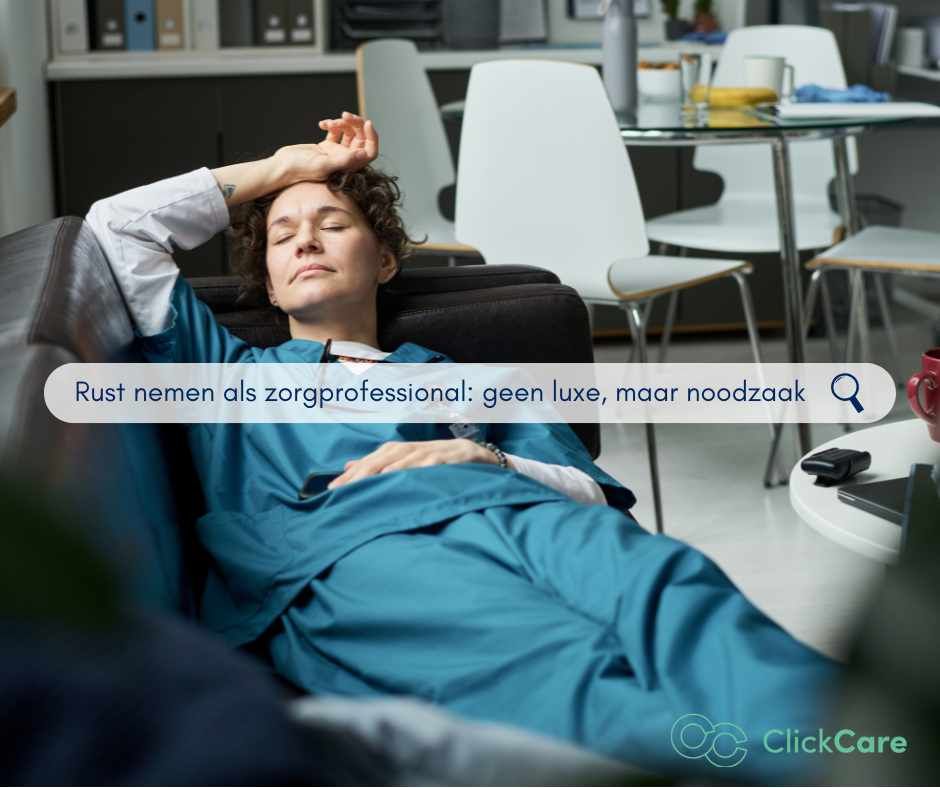
After a long shift, you’re finally home, but your mind is still at work. Did I do everything? Should I have helped that colleague after all? Can I take on another extra shift tomorrow? Working in healthcare asks a lot of you. You are constantly there for others, often with little room to check in on yourself—and your body feels it.
As a healthcare professional, you know better than anyone how vital recovery is. Yet, taking rest is often the very first thing to disappear when the workload rises. But that is exactly why relaxation and a healthy work-life balance are not luxuries. They form the necessary foundation to keep doing your job effectively.
Why is taking rest so important right now?
You process an enormous amount of stimuli every day In healthcare, information is constantly coming at you: patients, colleagues, emotions, time pressure, unexpected changes... Your brain barely gets a break. When you don’t rest enough, these stimuli pile up. This can lead to fatigue, concentration issues, and emotional exhaustion. Resting helps you process these stimuli and clear your mind again.
Your system is always "on" Many healthcare professionals feel like they always need to be available. You step in to cover, swap shifts, answer messages outside your working hours, or find it hard to say "no" out of a sense of responsibility toward colleagues and patients. This constant state of alertness takes a huge toll on your nervous system. In the long run, this can lead to stress, fatigue, and the feeling that you can never truly relax. Of course, we know that taking rest is not always easy in practice given the high workload and flexibility required in the healthcare sector. But that is precisely why it is important to consciously build in small moments of recovery.
Rest triggers creativity When you are constantly under pressure, you often enter survival mode. You do what needs to be done, but there is little room to think clearly or find creative solutions. It is often during moments of rest that perspective emerges. Taking a step back after a tough conversation with a patient helps you regain an overview and move forward with fresh energy.
Rest makes you more effective Many people think that working harder automatically means working better. But without recovery, your focus, energy, and resilience drop. Rest ensures that you work more efficiently, make better decisions, and can be more present for others—and for yourself.
What are effective strategies to unwind?
See rest as an investment in yourself Many healthcare professionals find it difficult to take a break when tasks are still pending or colleagues are busy. Because of this, relaxing can sometimes feel like doing "nothing useful." Perhaps you feel like you are letting your colleagues down when you can't cover a shift. Take a moment to think about how you view rest. Do you find it hard to take a break when your to-do list is still full? Do you feel guilty when you do nothing for a while after your shift? Rest is maintenance for your body and mind. The better you take care of yourself, the better you can keep taking care of others.
Make time for recovery After a busy workday, your body often remains in an active mode. That's why it can help to create a small transition moment between work and home. This doesn't have to be anything grand.
For example, consider: • A short walk after your shift • A few conscious breaths in the car or train • Listening to music on your way home • Stretching or yoga • Putting your phone away for a while • A quiet coffee moment without distractions Self-care does not have to be perfect or grand. Small habits can make a huge difference when applied regularly.
- Keep doing things that give you energy When things get busy, we often cut the exact activities that help us recharge. Working out, meeting friends, hobbies, or moments of rest disappear from the schedule first. Yet these very things are essential to stay balanced. Try to consciously schedule activities that give you energy, even if it’s something small. Reading for half an hour, listening to music, being creative, or going for a short walk can already help you feel energized again.
Ask yourself: • What gives me energy? • What drains my energy? • Where can I make small adjustments?
Caring for others starts with caring for yourself
In healthcare, you are used to always being there for others, but you deserve that same care too. Taking rest doesn’t mean you are less committed to your job. On the contrary: it helps you remain present for your patients, colleagues, and yourself with more energy, focus, and resilience. At ClickCare, we believe that good care starts with healthcare professionals who feel good in their work. That is why we consciously choose greater flexibility and autonomy in healthcare. Through our platform, healthcare professionals decide for themselves where and when they work, so work can be better tailored to their lives. At the same time, we help healthcare organizations fill open shifts faster, helping to alleviate staff shortages. Because good care is not just about having enough hands, but about healthcare professionals who get enough room to recover.